Washington argues U.S. companies would invest more in the EU if it rolls back its digital rule book.
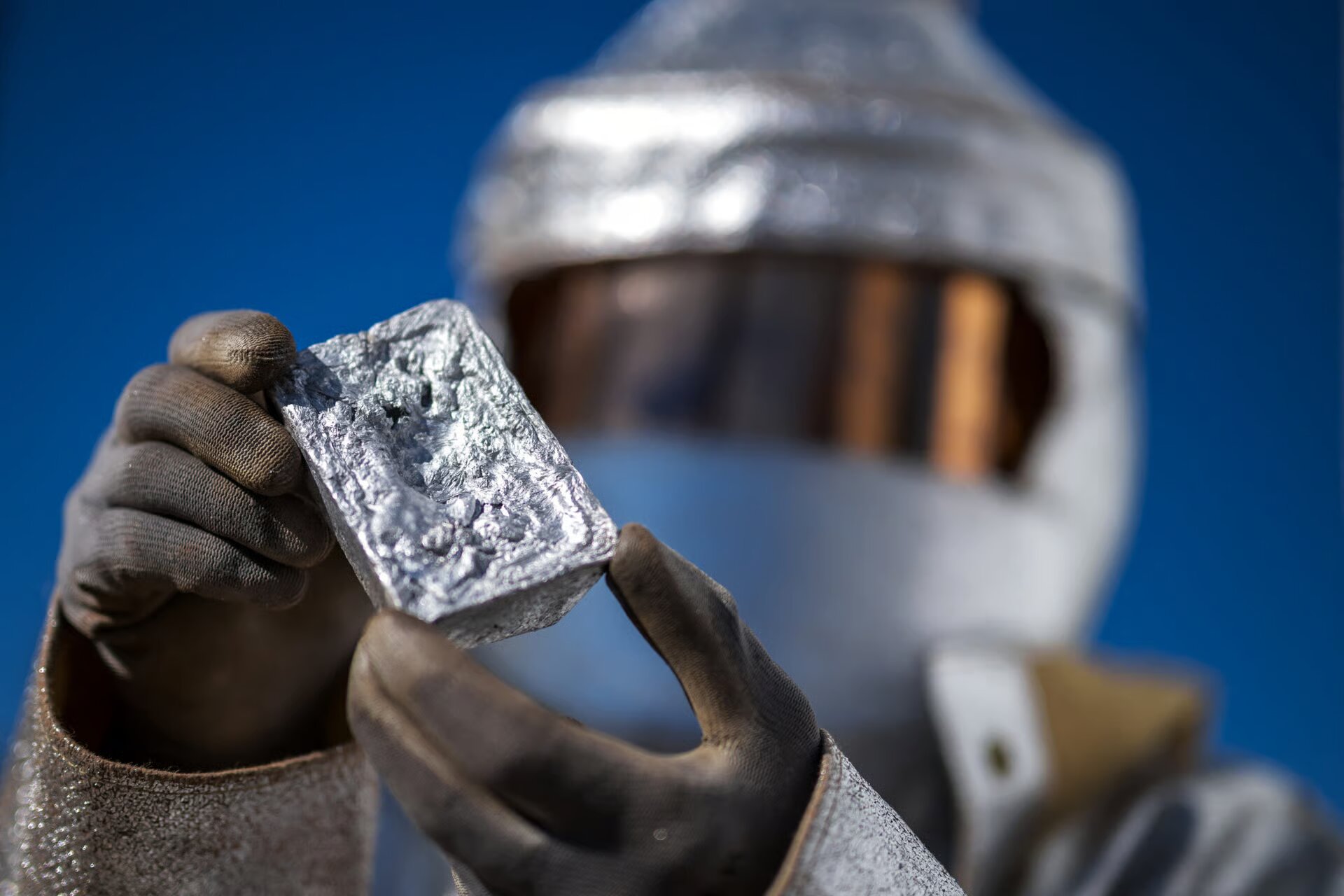
BRUSSELS — The EU’s push for the U.S. to scrap its tariffs on steel and aluminum has opened the door to an old demand from Washington: Loosen your digital rule book, and we’ll meet you halfway.
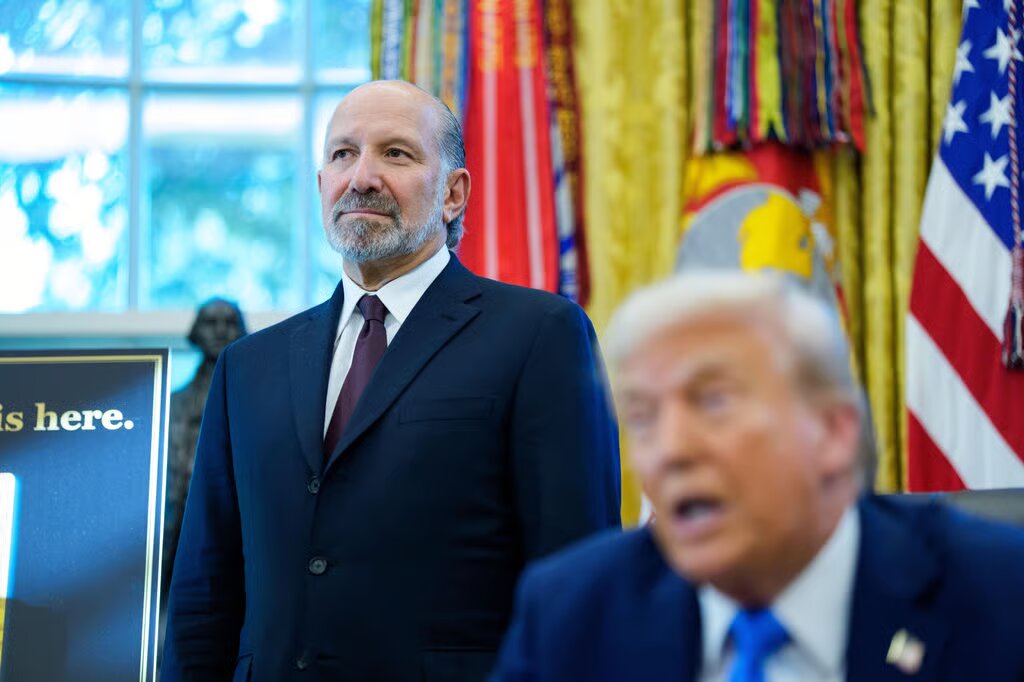
Brussels raised its concerns over Washington’s expanded list of goods covered by high steel and aluminum tariffs at meetings on Monday between Trade Commissioner Maroš Šefčovič and EU trade ministers and, from the U.S. side, Secretary of Commerce Howard Lutnick and Trade Representative Jamieson Greer.
The Commerce Department in August subjected over 400 products containing steel and aluminum to a 50 percent tariff — a list the EU feels is so broad it goes against the spirit of a framework trade deal struck in July.
That trade deal, which President Donald Trump and European Commission President Ursula von der Leyen clinched at Trump’s Turnberry golf resort in Scotland, sets a baseline tariff of 15 percent on most EU imports to the U.S., while the EU committed to cutting most of its own tariffs to zero. At the time, the EU and the U.S. pledged to work together to reduce tariffs on steel and aluminum — but remained vague on the details.
After the Europeans raised the steel tariffs on Monday, Lutnick responded by calling on the EU to “analyze their digital rules, trying to come away with a balance … not put them away, but find a balanced approach that works with us.”
“And if they can come up with that balanced approach, which I think they can, then we will, together with them, handle the steel and aluminum issues and bring that on together,” he added.
Lutnick’s remarks signal a departure from the previous U.S. position, which threatened to retaliate against the bloc’s digital laws, while advocating for light-touch artificial intelligence regulation.
Lutnick sold the loosening of the bloc’s digital rules as an “opportunity” for the EU, offering U.S. investment in return, mainly through data centers that could power artificial intelligence.
“If the European Union can find a way to have a balanced digital set of rules, I think the European Union can see $1 trillion of investment,” he said.
Pushing back — sort of
In response, Šefčovič reiterated the bloc’s commitment to its regulatory autonomy and its belief that its rules are not — contrary to what Washington asserts — discriminatory.
The EU side, he added, “explained how our legislation is working, we explained that this is not discriminatory. It’s not aimed at American companies. And I think that we just simply need to do more of the explanation in that regard.”
A Commission official, speaking on condition of anonymity, was more direct: “Steel and digital are completely unrelated. Steel has always been part of the discussions with the U.S. and has been formalized in the joint statement. Our sovereign digital legislation is not up for negotiations.”
The EU executive has already moved to simplify its tech rules through a digital omnibus presented last week, an effort that the EU’s tech chief, Henna Virkkunen, raised with Lutnick and Greer at an earlier meeting that day.
That omnibus brought major changes to the EU’s GDPR data protection regulation, and also proposed to pause the rollout of a key part of the EU’s Artificial Intelligence Act — a controversial move championed by U.S. Big Tech companies and lobby groups.
European lawmakers and civil society groups have expressed concerns in recent weeks that the Commission’s digital simplification push is meant to placate Washington, a claim the Commission has vehemently denied.
Lawmakers are due to discuss the digital simplification package with the Commission on Tuesday. Last week, the Commission also kicked off a process to review all of its tech rule books, which could lead to further simplification efforts.
Steel talks
Washington’s earlier decision to widen the list of steel products facing the 50 percent tariff caused uproar in Brussels, with some European lawmakers arguing that the EU should refrain from lowering its own tariffs on steel until the issue is resolved.
In a bid to cozy up to the White House, the EU side on Monday pushed the idea that Brussels and Washington should jointly face up to a common enemy — China — rather than dwelling on their differences.
Danish Foreign Minister Lars Løkke Rasmussen said the two sides had addressed “some of the challenges we are facing together,” such as “overcapacity” and “China’s role in the global economy.”
Asked about joint work on overcapacity, Lutnick said such issues are “easy for us to work together, and those don’t take up a lot of time when we’re talking, because when everybody just agrees right away, it’s not very difficult.”
Behind closed doors, however, the U.S. stressed to its European counterparts that cooperation on China didn’t mean they would simply give the EU a pass on steel and aluminum tariffs.
Šefčovič said a team from Brussels would travel to Washington in the coming weeks to address these issues.