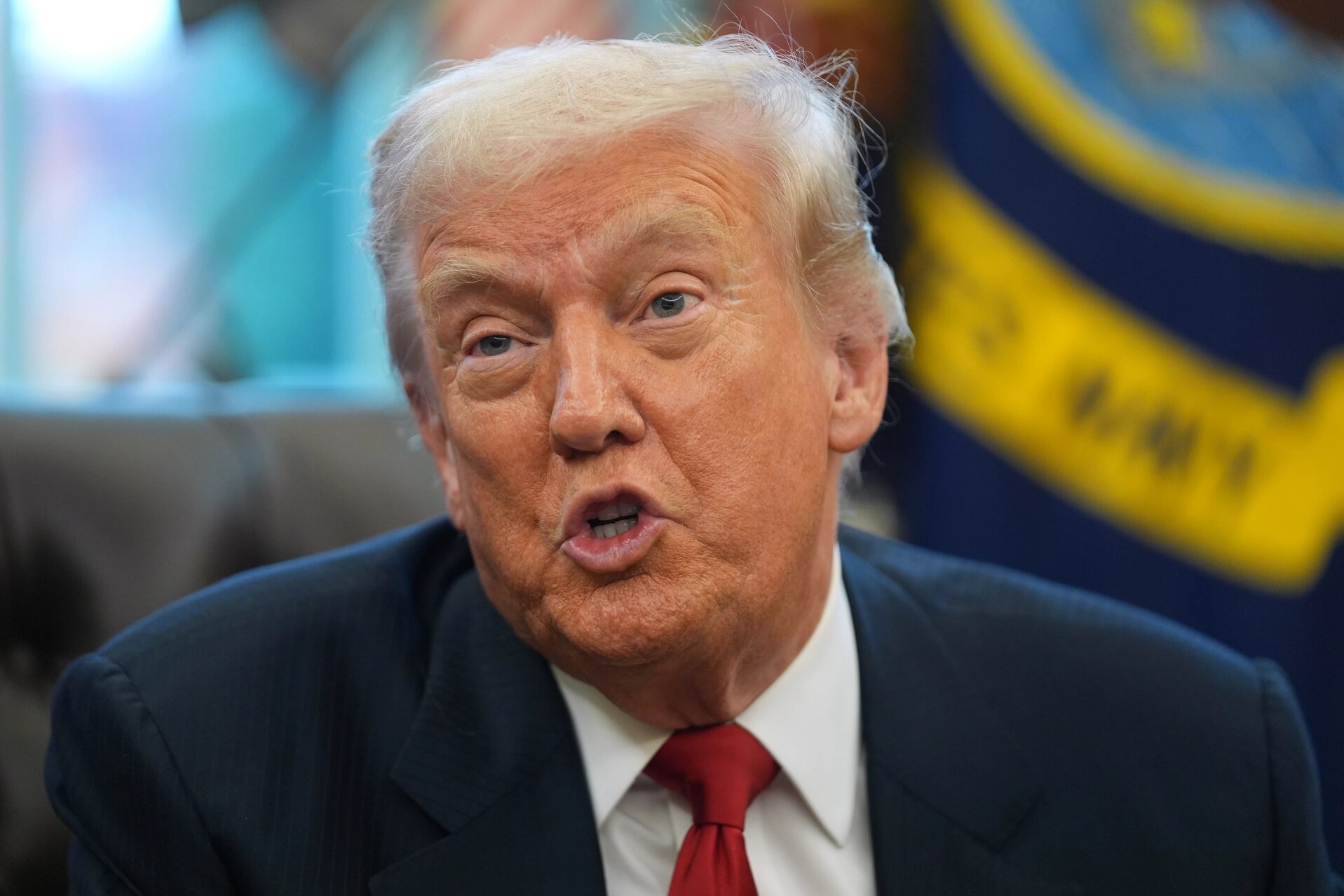
Trump’s overriding desire to stop the bloodshed helps explain why the details of the plan remain fluid.
President Donald Trump’s primary goal is to end the war in Ukraine, no matter what the peace deal looks like.
As European allies and the Ukrainians haggled over the details of an initial 28-point plan that would have given Donbas over to Russia, White House officials stressed that Trump doesn’t have red lines – just as long as both sides agree and the war comes to a close.
“The ultimate goal is peace. That’s the most important thing that can be achieved here. Stop the fighting, stop the killing. Those are the main things he wants out of this,” said a senior White House official, granted anonymity to discuss ongoing peace negotiations.
Trump would sign on to a deal that stops “the war, and whatever agreement that both sides can agree on as quickly as possible,” the official added.
Trump’s overriding desire to stop the bloodshed helps explain why the details of the plan remain fluid, and why the president in the span of 24 hours can go from giving Ukraine a Thursday deadline to agree to his plan to stressing that his proposal is not a final offer. It also sheds light on why multiple U.S. officials appear to be leading negotiations, including Secretary of State Marco Rubio, who arrived in Geneva on Sunday to speak with Europeans and Ukrainians.
Trump’s proposal, which was released last week, required Ukraine to make major land concessions, including the entirety of Donbas, Luhansk and Crimea, as well as agreeing to never join NATO.
Its tilt toward Russian demands had some Republicans concerned that Trump’s focus on stopping the war was leading to a bad deal for Ukraine.
Several senators, including Mitch McConnell (R-Ky.) Lindsey Graham (R-S.C.) and Mike Rounds (R-S.D.) condemned the proposal.
“Those who think pressuring the victim and appeasing the aggressor will bring peace are kidding themselves,” McConnell posted on X this week.
But Trump has long seen himself as a “mediator” in the war and doesn’t want to take sides, a notable contrast from former President Joe Biden and most of the U.S.’s European allies. They insist Ukraine is a victim of Russian aggression and its concerns are paramount.
White House spokesperson Anna Kelly pointed to Trump’s desire to keep both sides talking, without seeking a particular outcome, other than peace.
“President Trump’s goal is to end the war – which would have never happened if he was President, and has taken the lives of millions of people. He is working to prevent the further loss of life through a durable and enforceable peace,” Kelly said.
Rubio, special envoy Steve Witkoff and Vice President JD Vance, have since negotiated the terms with the Ukrainians and the current proposal has been whittled down to a 19-point plan. But as they move closer to a deal that Europe and Ukraine can live with, the mood in Moscow appears increasingly pessimistic, which is likely to frustrate Trump’s ultimate aim of resolving the conflict quickly.
Trump’s plan – even as it is changed — represents the most significant proposal to end the nearly four-year war, the largest in Europe since 1945.
White House officials said last week they thought Ukraine President Volodymyr Zelenskyy was in a particularly weak position domestically, owing to a growing corruption scandal that has ensnared his inner circle, opening the door to striking a deal.
At the same time, some feared that a weakened Zelenskyy would not have the political capital to sell a bad deal to Ukraine.
U.K. Prime Minister Keir Starmer hosted a call Tuesday for the so-called coalition of the willing, a group of countries that have pledged to support Ukraine. During a briefing on Tuesday, a spokesperson for the prime minister confirmed a willingness to send troops as part of a multinational force. The European counterproposal leaves open the possibility of Ukraine joining NATO and demands a ceasefire before any land negotiations take place.