A state court instituted a map that created one blue seat in the state.
Utah’s Republican-controlled Legislature plans to appeal the state’s new court-ordered congressional map to the state Supreme Court, legislative leadership announced Tuesday.
A state district judge installed a new map earlier this month that creates a safe-blue seat around Salt Lake City, delivering Democrats an opportunity to break into the all-GOP delegation. Utah Gov. Spencer Cox will call a special session on Dec. 9, likely to delay the state’s candidate filing deadline as a potential appeal makes its way through the courts, state Senate President Stuart Adams announced Tuesday.
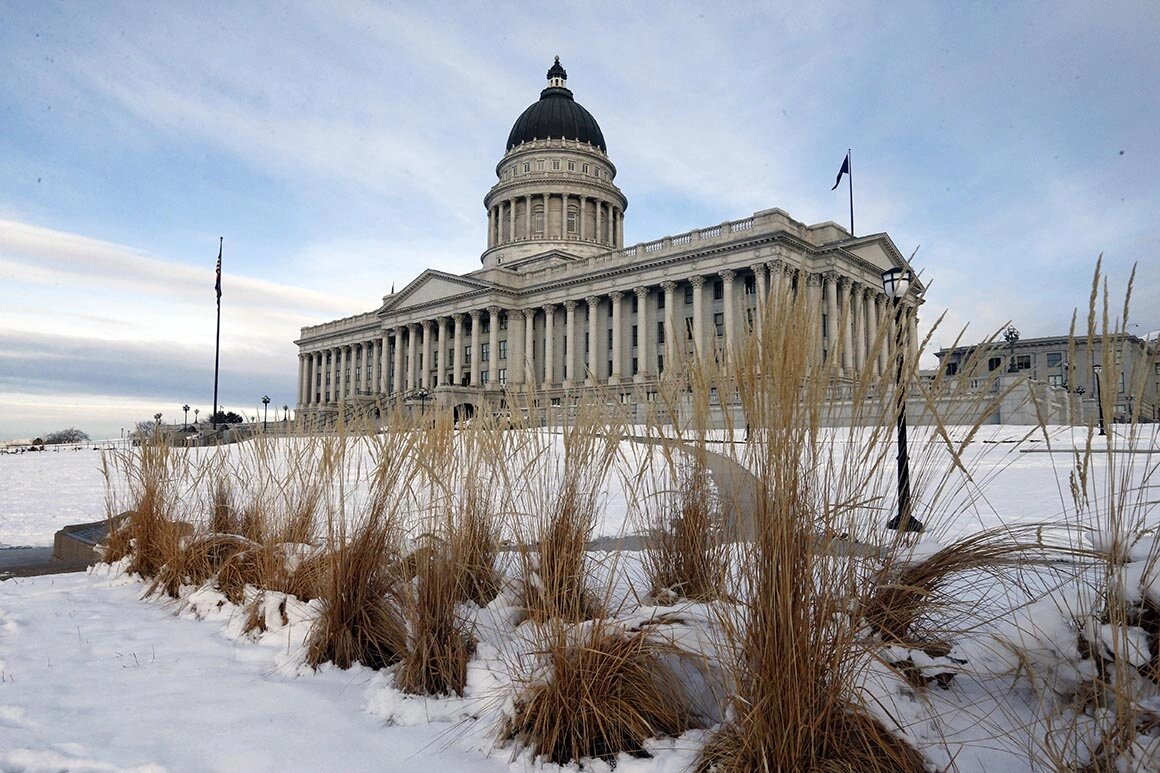
“By design or by default, Judge [Dianna] Gibson has authorized the most partisan and thus the most gerrymandered map in the history of the state of Utah,” Adams said during a press conference at the Utah Capitol Tuesday morning.
Utah House Speaker Mike Schultz said the Legislature is awaiting Gibson — who was appointed to the bench by former Gov. Gary Herbert, a Republican — to “wrap up her final decision,” at which point the Legislature will appeal to the state’s highest court. Legislators have also said they will attempt to impeach Gibson.
This is the latest episode in a yearslong redistricting saga in Utah. In 2018, Utah voters passed Proposition 4, an anti-gerrymandering ballot initiative that created an independent redistricting commission, which the GOP-controlled state Legislature subsequently reduced to an advisory role. The Legislature-drawn congressional map — which included four safely Republican seats — faced a lawsuit, and Gibson ordered the state Legislature to redraw it in August.
The Legislature passed a new map in October with four red seats, which Cox signed into law. Gibson rejected that map, saying it “fails to abide by and conform with the requirements” of Proposition 4.
Cox and Schultz both said they supported appealing the decision earlier this month, but Schultz later told a local TV station the Nov. 10 deadline for a new map — and the timing of Gibson’s decision, which arrived late that night — tied their hands.
The new map also put Utah’s congressional delegation in a bind, forcing the four current Republican members of the delegation to compete for three GOP seats. Meanwhile, a crowded, competitive Democratic primary has already emerged in the Salt Lake City-based 1st District, where former Rep. Ben McAdams — the last Democrat to represent Utah in Congress — faces several challengers to his left.
Adams said the Legislature will “try our best” to install a new map ahead of the 2026 elections.
“We’ve said as a Legislature over and over and over again that our focus right now is standing to get the people’s voice back and to find a pathway forward so that the people are the ones choosing the maps, not one judge,” Schultz said.