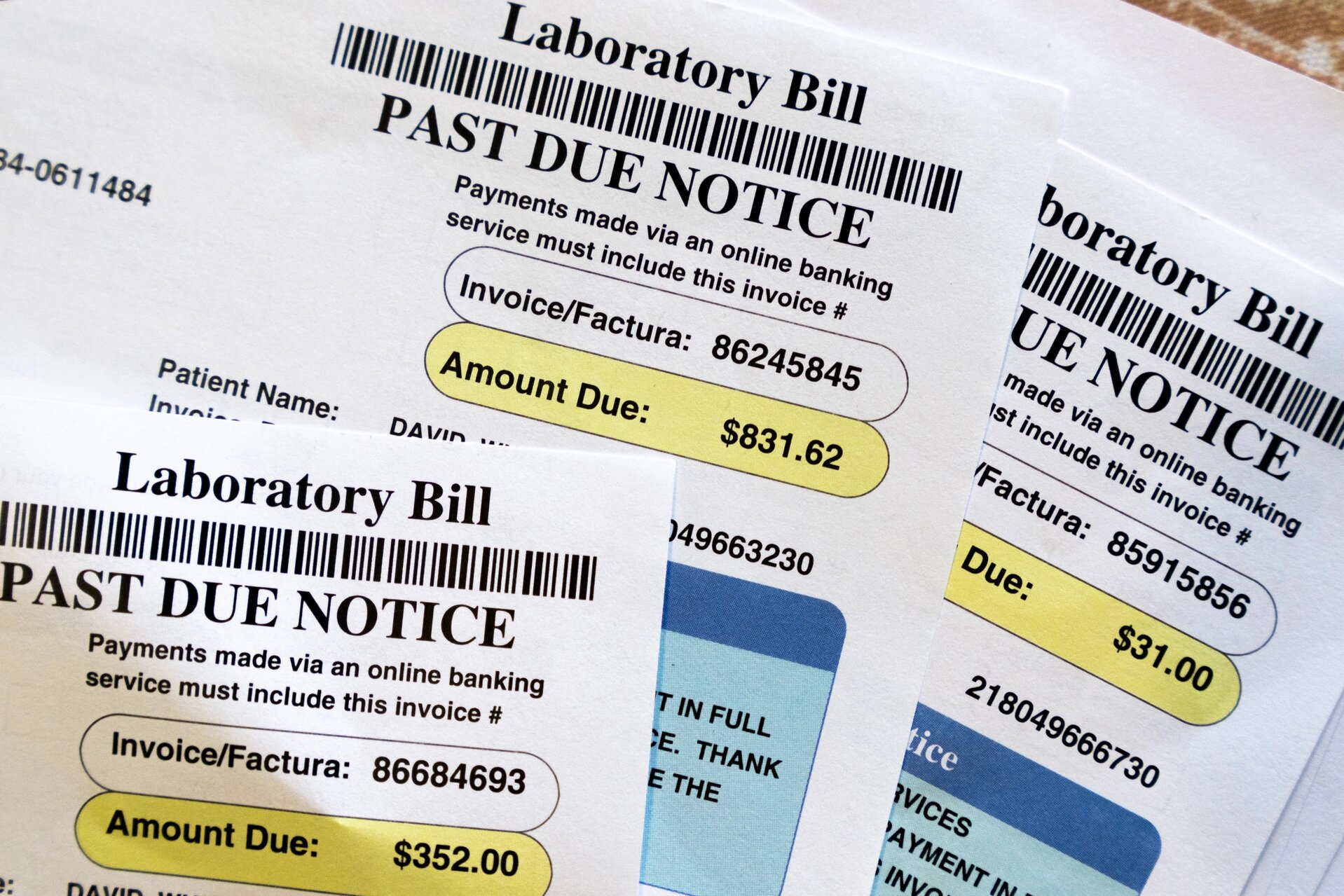
Charities that help people pay for care say demand is way up. That’s before scheduled Medicaid and Obamacare cuts take effect.
Charities that help people cover their medical bills say they’re seeing an alarming increase in requests for help.
Worse yet, they say, it’s coming even before cuts to Medicaid in President Donald Trump’s One Big Beautiful Bill Act take effect and the potential expiration of Obamacare subsidies at year’s end. The charities are warning of exploding medical debt and lower survival rates for diseases like cancer if Congress doesn’t act.
“Our organization can’t really handle much more demand,” said Michael Sapienza, chief executive of the Colorectal Cancer Alliance, which helps patients pay for colonoscopies, tests and cancer treatment.
Financial assistance from the HealthWell Foundation, one of the largest charities in the country, is already 23 percent higher this year than all of last year. Requests swamped the fund it launched this month to help consumers offset higher Obamacare premiums that are likely if the subsidies expire, prompting it to stop taking new applicants after just two days. The Colorectal Cancer Alliance has seen a 26 percent increase in requests year-over-year, and CancerCare, another charity, has seen a 10 percent increase in year-over-year requests.
Michael Heimall, HealthWell’s chief executive, expects the spike in assistance requests to continue next year and expressed concern over whether donors, who are also under price pressure, can maintain or ramp up their payments.
“I don’t see the demand curve flattening out in the foreseeable future,” said Heimall. “As economic things tighten, your donors have to make decisions about if they are going to donate to a charity or are they going to invest in some of the things they need to invest in?”
The strain on health care charities, often one of the last stopgaps keeping low-income Americans from going without care, arrives as Americans struggle with rising health care costs and as Trump and congressional Republicans face greater pressure to deliver price relief.
Kush Desai, a White House spokesperson, blamed Democrats for higher health care costs.
“Democrats’ push to maintain these high prices by giving more money to insurance companies is not a real solution for President Trump,” he said in a statement. “The President has instead focused on lowering prescription drug costs by hammering out deals with pharmaceutical companies, as well as taking on waste, fraud and abuse in the system to deliver results for patients.”
So far, five drugmakers, including Pfizer, AstraZeneca, and Eli Lilly, have brokered deals with the president to lower drug prices in exchange for tariff reprieve. In addition, the administration yesterday announced lower prices it had negotiated on 15 high-cost drugs that it said would save seniors with Medicare drug plans $685 million when the new prices take effect in 2027.
Although the vast majority of Americans are insured either by Medicare, Medicaid or a private plan, a growing share say they’re struggling to pay their bills as deductibles continue to rise, often outpacing wage growth. Almost half of U.S. adults are worried about their ability to afford health care next year, according to the POLITICO Poll for November, with nearly 1 in 5 saying they found health care very difficult to afford. The poll of 2,098 U.S. adults was conducted by Public First.
The struggle to afford health care comes as the Trump administration’s effort to curb prices has shown little effect — inflation has held steady around 3 percent since Trump took office in January — and Americans are worn down after years of rapid price increases. Inflation peaked above 9 percent in 2022.
“It’s just accumulated over time, and there’s been no break,” said Vivian Ho, chair of health economics at Rice University’s Baker Institute for Public Policy. “The Trump economy is not focusing on the root causes of why health care costs are so high in this country.”
The requests for charity care reflect the uninsured rate, 8 percent, as well as the many people facing high deductibles and co-payments or coverage limits. There’s also greater awareness about assistance programs. While drugmakers offer assistance to the uninsured or patients on private plans, they are not allowed to help patients on Medicare and Medicaid, leaving charities to fill the gap. Assistance programs are disease-specific and vary by charity, and patients undergo income, diagnosis and insurance verification checks before they receive help.
Charitable health foundations are preparing for a surge in requests for assistance in January, when the enhanced Obamacare subsidies are slated to expire. Trump and lawmakers on Capitol Hill are considering extending them, but can’t agree on the details. Some conservative lawmakers are content to see the subsidies, which Democrats increased in a 2021 pandemic-relief law, go away. The enhanced subsidies made insurance plans free for many and offered Obamacare subsidies for the first time to people earning more than 400 percent of the poverty level.
If Congress does nothing, subsidies will revert to the original levels set in 2010. An analysis from KFF, a health care-focused think tank, found that insurers have raised premiums by 26 percent on average on the ACA marketplaces for 2026 in anticipation of the subsidies’ expiration. The Congressional Budget Office, a nonpartisan scorekeeper, estimates that 4 million Americans will lose coverage if the enhanced subsidies expire.
The One Big Beautiful Bill Act that Trump signed in July included nearly $1 trillion in cuts to Medicaid, the state-federal health insurance program for low-income people over 10 years. The CBO expects that’ll prompt states to drop about 10 million people from the program by 2034, many because they do not comply with new rules requiring they work, volunteer or go to school for 80 hours a month. Those requirements don’t take effect until 2027.
Democrats made extending the Obamacare subsidies their principal demand during the historic six-week government shutdown that ended earlier this month. The White House plan that leaked last weekend would extend them for two years with an income cap and no free plans, though Trump said Tuesday he didn’t support a two-year extension. Hill Republicans are pondering a variety of bills, including some that would encourage more people to enroll in high-deductible plans while redirecting subsidies to tax-advantaged accounts that could be used to cover the deductibles or premiums. Trump has endorsed that idea.
But as yet, there’s no indication any plan has the votes to pass. The charities are worried.
Some, including the Patient Access Network Foundation, Blood Cancer United and the Colorectal Cancer Alliance, are urging Congress to extend the subsidies.
“Extend the current premium tax credits. These Americans’ lives are too important to hang in the balance while Congress writes a new policy on the back of a napkin,” said Brian Connell, vice president of federal affairs at Blood Cancer United at a House Ways and Means Committee hearing earlier this month.
Blood Cancer United spent $1.3 million on lobbying the first nine months of this year, outpacing its totals for any year on record.
An inability to pay medical bills “will be lethal for many people,” said Erin Ercoline, executive director at the ThriveWell Cancer Foundation, which provides financial assistance for medical payments, transportation and lodging for cancer patients in San Antonio. Ercoline reckons ThriveWell provided around $2.2 million in financial assistance to 1,500 patients this year, its highest on record with the exception of the Covid-19 pandemic. They turn away about three in four patients.
“People are not going to survive a totally survivable diagnosis because of the lack of insurance,” Ercoline said.