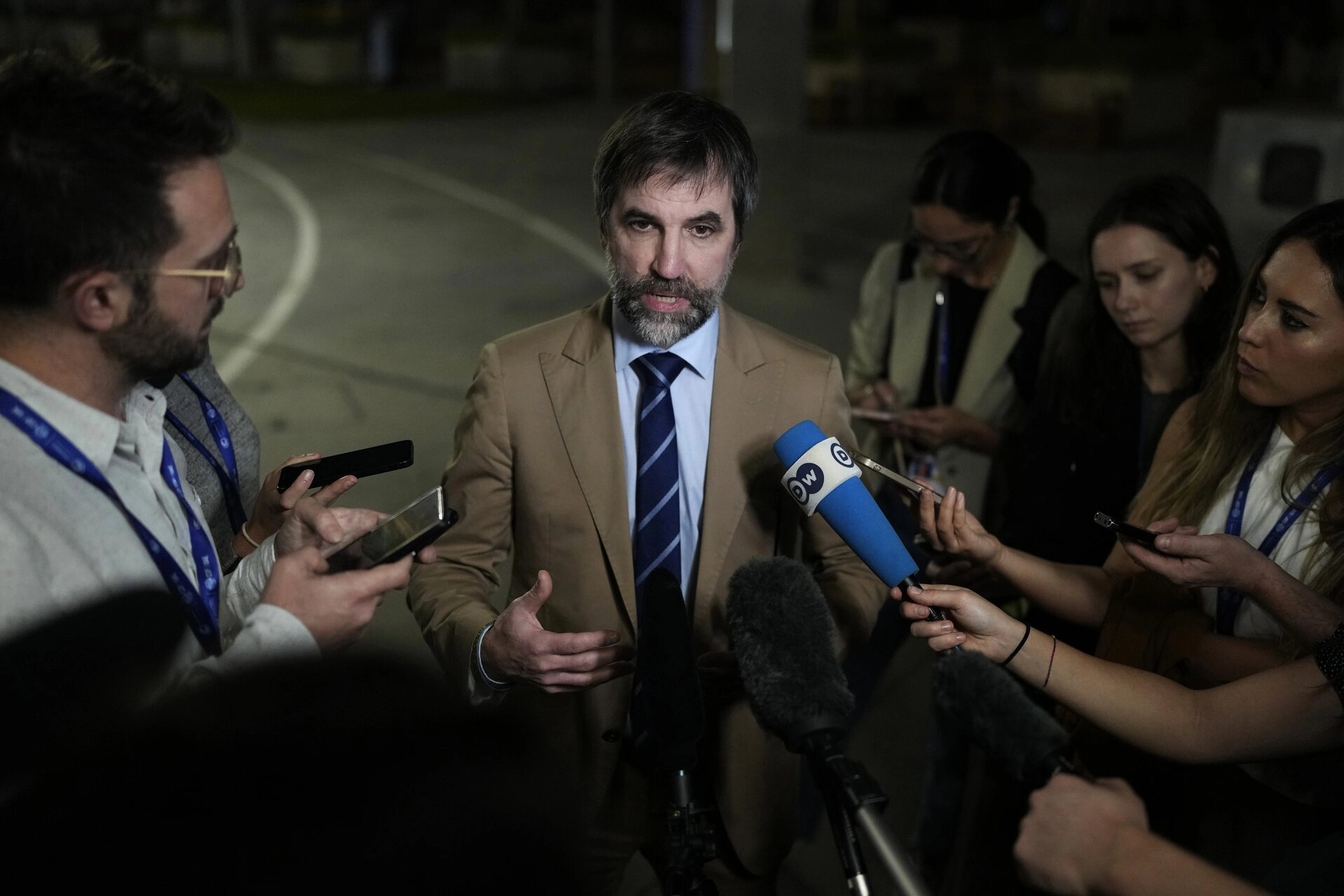
Trudeau-era climate minister says Alberta energy deal betrays “environmental issues.”
OTTAWA — A prominent member of Mark Carney’s Cabinet quit Thursday in protest of the Liberal government’s decision to roll back Canada’s environmental policies and clear the way for a new oil pipeline.
Steven Guilbeault, a Trudeau-era climate minister, resigned in a statement on social media.
He said while he is leaving Carney’s team of ministers, he will remain a member of Parliament within the Liberal caucus.
On Thursday in Calgary, Carney and Alberta Premier Danielle Smith signed an agreement that paves the way to boost oil production, advance new pipelines and overhaul controversial energy laws that were a hallmark of then-Prime Minister Justin Trudeau’s government.
The deal is the clearest signal yet Carney is steering the Liberal government toward a more industry-friendly energy policy — a shift significant enough to trigger the resignation of a key Cabinet minister from Quebec. The prime minister has vowed to make Canada an “energy superpower” to grow the economy and spur investment. Carney said Thursday that President Donald Trump’s tariffs on Canadian goods and the uncertainty they’ve created will wipe C$50 billion from the Canadian economy.
“Despite this difficult economic context, I remain one of those for whom environmental issues must remain front and center,” Guilbeault said in his statement. He had most recently served as minister of identity.
“That is why I strongly oppose the Memorandum of Understanding between the federal government and the government of Alberta.”
Guilbeault championed many of those laws when he served under Trudeau.
“Over the past few months, several elements of the climate action plan I worked on as Minister of the Environment have been, or are about to be, dismantled,” he said in his statement. “In my view, these measures remain essential to our climate action plan.”
Carney thanked Guilbeault for his climate leadership in a statement Thursday evening. “While we may have differing views at times on how exactly we make essential progress, I am glad Steven will continue to offer his important perspectives as a Member of Parliament in our Liberal caucus.”
Guilbeault, who had endorsed Carney as Liberal leader and backed him in his run for prime minister, insisted at the time that Carney would continue to champion past Liberal policies on the environment.
“He’s the right person to help bring us into the next phase of our work to support Canadians, to build a strong economy and to fight climate change,” Guilbeault said in January.
Carney, a onetime U.N. climate envoy, campaigned in the last election on a promise to transform Canada “at speeds we haven’t seen in generations.”
On his first day in office, Carney pulled out a Sharpie and a prop to sign Canada’s consumer carbon tax out of existence. He has also paused Canada’s electric vehicle mandate, which would require 20 percent of new vehicles sold in Canada next year to be electric. In his statement, Guilbeault hinted that policy will soon be repealed altogether.
Alberta’s United Conservative Party often sparred with Guilbeault — once even encouraging Tucker Carlson to target him.
“I wish you would put Steven Guilbeault in your crosshairs,” Premier Danielle Smith said at a Calgary event in January 2024 headlined by Carlson. “He believes he has the expertise and knowledge to tell us in Alberta how to run our power grid.”
Smith continued to see Guilbeault’s signature policy as a threat to her province’s oil and gas industry, even in his role overseeing the Parks Canada Agency. Smith told her radio show in June that he had an “overt motive” to create new federal parks to block the path of pipelines and other energy infrastructure.
“Our government is very excited about this agreement and the prosperity and opportunities it will bring for Albertans and all Canadians, it’s unfortunate that Mr. Guilbeault doesn’t feel the same way,” the premier’s office told POLITICO in a statement.
Carney didn’t immediately appoint a new identity minister — a role that includes overseeing federal regulation of U.S.-based tech giants, Canada’s cultural sectors and the country’s public broadcaster.
Before walking out of Cabinet, Guilbeault had been leading the charge on drafting an online harms bill, a long-promised piece of legislation that was under fire for prolonged delays.
Before entering politics, Guilbeault was an environmentalist and climate activist.
“I knew coming into politics that I may have to either take decisions or support decisions that I wouldn’t necessarily agree with,” the former Greenpeace and Équiterre campaigner once told POLITICO.