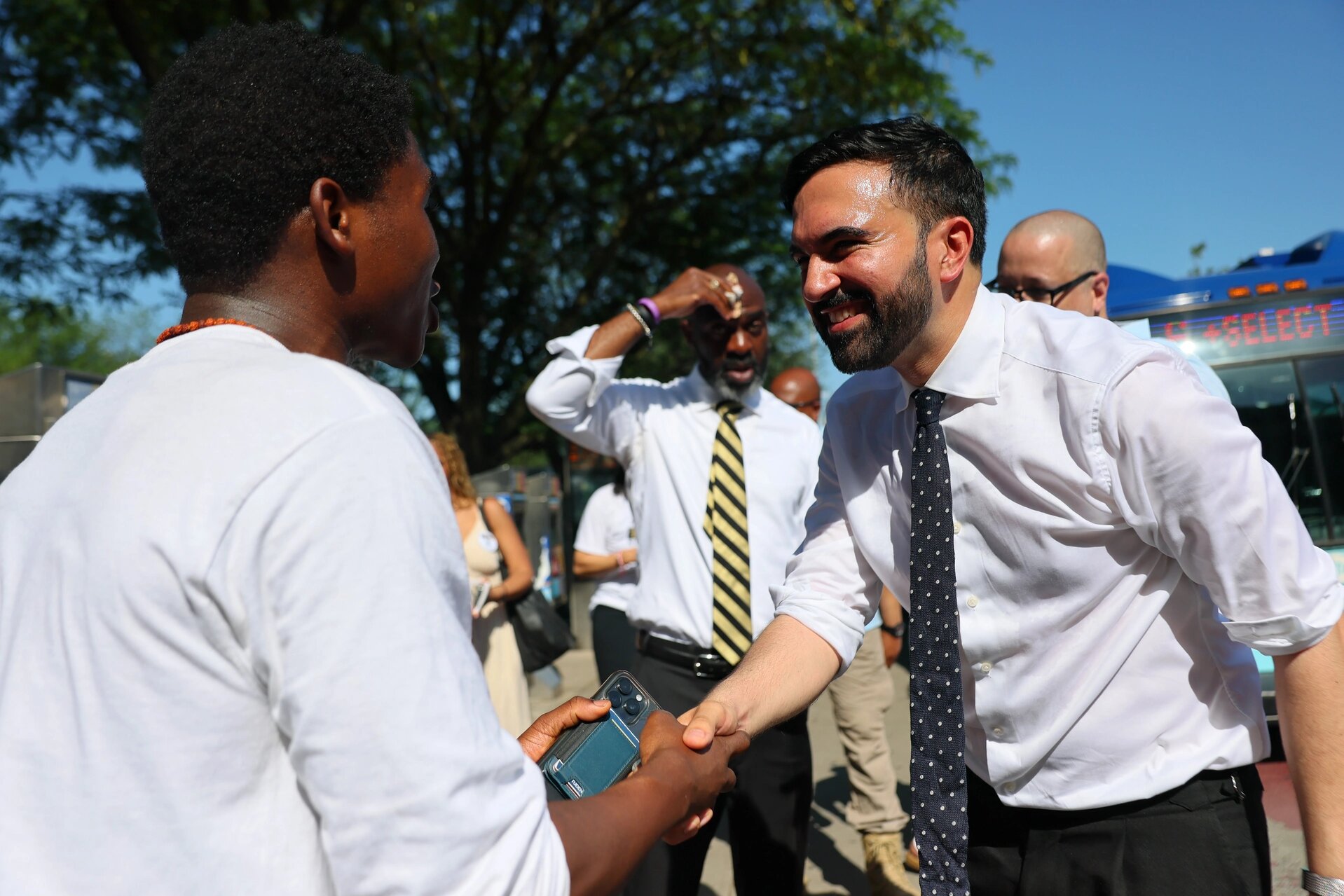
Democrats stormed back with young men in off-year elections. But the biggest test will come next year.
Democrats overperformed with young men in the off-year elections. Now comes the hard part: Replicating those results in the midterms amid an ideological divide in the party.
While Democrats across the board outdid their party’s performance in 2024 by wide margins, their gains with young male voters were even more drastic in several races. Party leaders are bullish Democrats can maintain that momentum heading into next year.
“I never want to hear again that the Democratic Party has a problem with young men,” DNC Chair Ken Martin said at a press conference. “We’re going to keep working hard to keep them in our camp and our coalition, for sure, but we won across the board with every major constituency that left our party last year, and that should tell you something again, that the Democratic Party is back.”
Martin said young people feel “disillusioned” by the lack of opportunities in the job market, a sentiment that he thinks voters largely attribute to the Trump administration. That hypothesis played out in several key races where Democrats’ consistent messaging on affordability paid off.
In Virginia, Gov.-elect Abigail Spanberger won men aged 18-29 by a larger margin than any other age group of male voters, per network exit polls. In New Jersey, Mikie Sherrill beat GOP opponent Jack Ciattarelli by a 14-point margin with the demographic. And in New York City, more than 6 in 10 men in the youngest age group went for democratic socialist Zohran Mamdani.
Democrats’ strong showing with young male voters comes amid constant worries from within the party that the economic anxiety, cultural alienation and the allure of conservative manosphere content pulled young men toward the Republican Party in recent years.
But the across-the board wins paper over an ideological divide that’s brewing in the party: Will young men be won back by moderation, or by Mamdani?
Mamdani attracted praise from all corners of his party for his ability to reach young men by exploiting the media landscape that catapulted Trump to political success. Still, not all Democrats are convinced that his approach should be a blueprint for Democrats heading into 2026.
Lucas Holtz, a senior political adviser at the center-left group Third Way, said Sherrill’s and Spanberger’s decisions to position themselves as moderate alternatives will be more effective at reaching young male voters in key swing states next year.
“In the same vein that we have to be running on lowering costs, making life more affordable, we also have to be hitting Trump, and I think that goes hand in hand with what Spanberger and Sherrill did really well on cultural issues,” he said. “They ran mainstream campaigns all the way — they didn’t get bogged down in any far- left, culturally alienating positions that I think Mamdani really did get bogged down in.”
But John Della Volpe, the director of polling at the Harvard Kennedy School’s Institute of Politics and a one-time Biden adviser, says the party may have a lot to learn from Mamdani.
The specificity of the Mamdani campaign’s promises, in addition to his focus on “listening, not lecturing,” allowed the democratic socialist to capitalize on the lack of trust young men have in the political establishments of both parties, he said.
“That can come from the right in Charlie Kirk, it can come from the left in Mamdani, but it’s about understanding that psychology and those motivations to create some level of trust so you can then engage in a more political conversation about why this policy and this candidate is better than that candidate and that policy,” he said.
In the run-up to this year’s elections, voters consistently ranked the economy as their top priority — and young voters in particular tend to express more pessimism than their older peers about the nation’s fiscal outlook.
In addition to offering a positive vision for affordability, Democrats’ effectiveness at tying economic frustrations to the Trump administration in the off-year elections provides a helpful model for the 2026 midterms, Della Volpe said.
Jane Rayburn, a Democratic pollster who worked on the Mamdani campaign, said Democrats succeeded in making an affirmative case for their party rather than simply offering a negative attack on Republicans, an approach that she sees as key to winning young male voters.
“I do think that all of these campaigns — but particularly Mamdani’s — one, really tried to not treat these voters like a monolith, and two, actually had, candidly, non-condescending and inclusive conversations with these voters to bring them into the dialogue,” Rayburn said.
To keep making inroads with young male voters next year, Democrats will have to focus on “candidate authenticity, giving voters something to vote for, and bringing back some hope and joy into campaigns,” she said.
Still, Republicans argue that Democrats’ gains this year were an aberration and not a reversal of a trend of young men racing toward the GOP. Republican strategist Matt Gorman said young men tend to tack closer to the median voter and are more prone to electoral swings than female voters — which he says presents an opening for Republicans to win them back in the midterms, particularly as President Donald Trump and other Republicans pivot toward an affordability message.
“Young women lean very far left on the average, so they’re likely to stick with Democrats, as expected — before this, after this. But winning back independents, including young men, with a message of affordability is where there is a road map towards next year,” he said.