The president says Thanksgiving food prices are down. But Americans are still feeling stretched thin by their grocery costs.
President Donald Trump keeps saying the cost of a Thanksgiving meal is cheaper this year. It might not be the winning message he thinks it is.
Sure, consumers are seeing savings on their table centerpiece, with retail turkey prices having dropped 16 percent since last year, per the American Farm Bureau Federation. Supermarkets like Target and Aldi revealed a price decline on popular side dishes. But the hidden reality is that grocers are eating some of those costs just for the holiday season, and several food industry groups and supply chain analysts predict prices will increase as soon as January — especially as bird flu resurges.
A temporary price drop won’t be enough to satisfy the average American voter, who is increasingly concerned about affordability ahead of the midterm elections and noticing that food costs remain well above what they can recall in recent memory.
New polling from POLITICO and Public First found that people are more worried about being able to afford their groceries than the rising cost of housing or health care, and 55 percent of them blame the current administration for the situation. This includes 20 percent of 2024 Trump voters, which reveals an uphill messaging battle for the president.
“I think there are many reasons why Donald Trump got elected, but the number one has to be how people felt about their own personal finances,” Rep. Don Beyer (D-Va.) said. “So now he’s been in office for all these months, and to my lights, he hasn’t done a single thing to reduce costs. Every action he’s taken is pushing them in the wrong direction.”
The White House in recent weeks has pointed to several measures of the cost of the Thanksgiving meal, including the Farm Bureau’s estimate, but left out some key details. For example, Walmart announced that its Thanksgiving basket could cost 25 percent less than it did last year — with the caveat that the basket is made up of fewer items, smaller quantities and cheaper brands this time around.
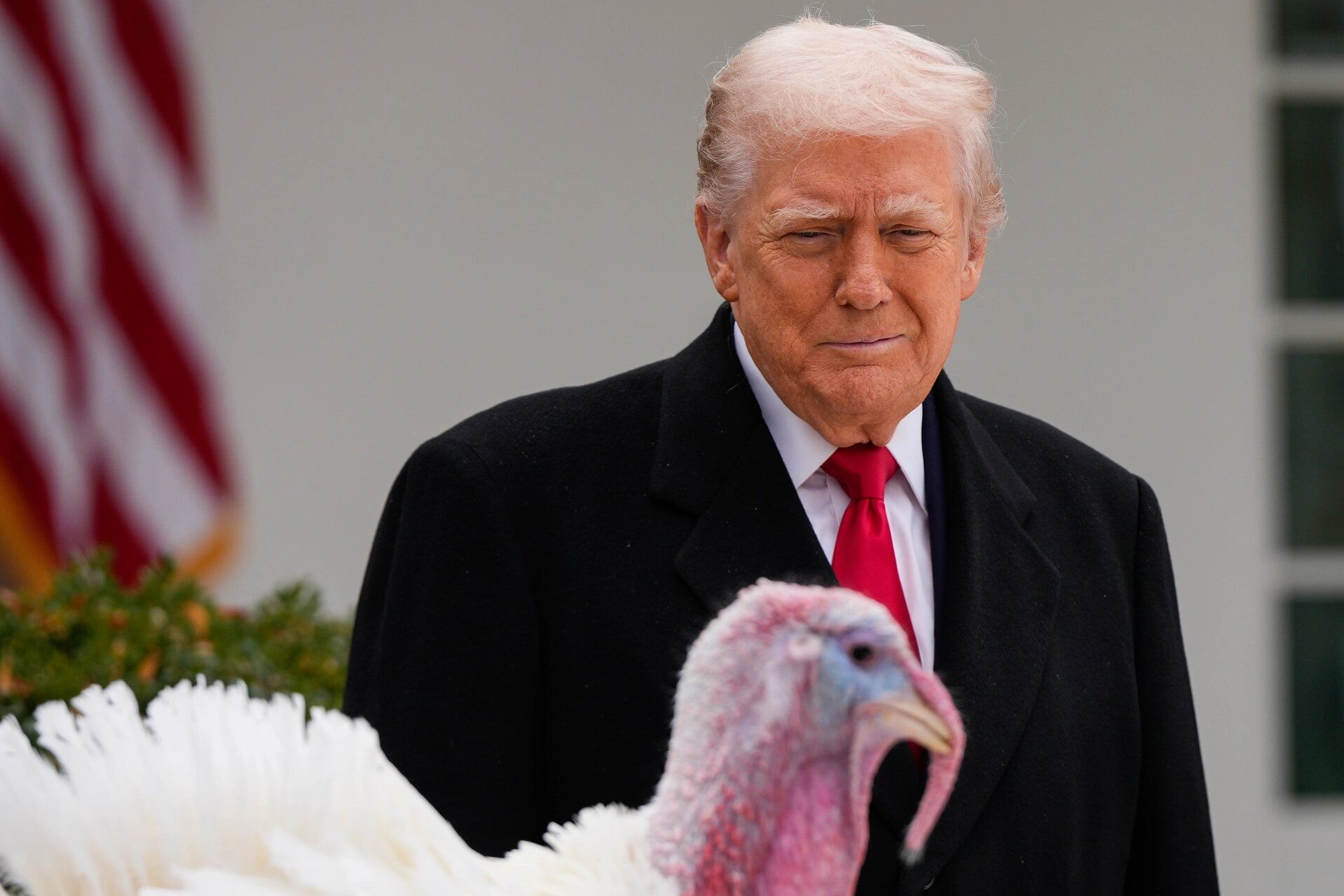
“Our country is doing really well economically, like we’ve never done before,” the president said during the annual turkey pardoning Tuesday in the White House Rose Garden.
Retailers are incentivized to make deep cuts to turkey prices around the holiday season as they look to lure more customers and draw them to other food items, leading to a muddled picture of what standard costs actually are. Come 2026, however, businesses could dramatically change their prices again.
“They are more than likely looking at the fact that a lot of the national retailers are running sales right now,” Nick Levendofsky, executive director of Kansas Farmers Union, said of the administration’s affordability claims. “Folks are struggling, and those misleading statements don’t help.”
Raymond Robertson, a professor of economics at Texas A&M University, agreed: “All of these forces are pointing to the same direction, which is sharper price increases.”
Presidents typically face significant challenges in bringing down grocery prices quickly. Republicans who capitalized on the Biden administration’s struggle to message on the economy in 2024 are now facing the same dilemma following losses in this month’s off-year elections.
The cost-of-living has increased since Trump has been in office, per the Consumer Price Index. Overall prices were up 3 percent from the same time last year in September, the latest available data. The cost of food rose slightly more, 3.1 percent, than the average cost of all items.
“With inflation having cooled and real wages having risen, the Administration remains laser focused on continuing to implement the economic agenda that created historic working-class prosperity in President Trump’s first term,” White House spokesperson Kush Desai said in a statement.
Trump announced a slate of policies to try to address consumers’ anxiety, but several of them could lead to mixed results or could take time to bear fruit. Some inflationary pressures that affect food prices, like high labor costs and the uncertainty climate change creates, also don’t have easy solutions.
This month, the president rolled back his own tariffs on staples the U.S. doesn’t grow, including coffee, after agriculture industry groups argued they were contributing to food inflation. But other tariffs on agricultural inputs, such as steel, aluminum and pesticides, remain.
“Vegetables like potatoes and green beans depend on fertilizer, equipment and fuel, all of which have increased in price,” Levendofsky said. “That means higher prices for mashed potatoes, casseroles and everyday side dishes that make up the Thanksgiving table.”
Trump’s other ideas have faced some skepticism. His decision to direct the Justice Department to investigate major meatpackers for allegedly colluding to raise prices will take years. Anti-monopoly supporters of the move are wary about his commitment to the strategy, given that the announcement comes just weeks after DOJ closed a separate investigation into the meatpackers.
And his most controversial pledge, to import more beef from Argentina to bring down the cost of a popular protein, angered U.S. ranchers, one of the president’s key constituencies. Farm groups and Republican lawmakers alike argued that the move would primarily undercut American business.
David Ortega, a professor of food economics at Michigan State University, called Trump’s decision to lift tariffs on food “welcome news,” but conceded the train may have already left the station.
“That’s why these types of policies are so concerning, and that’s because once prices go up, they don’t come down,” he said.